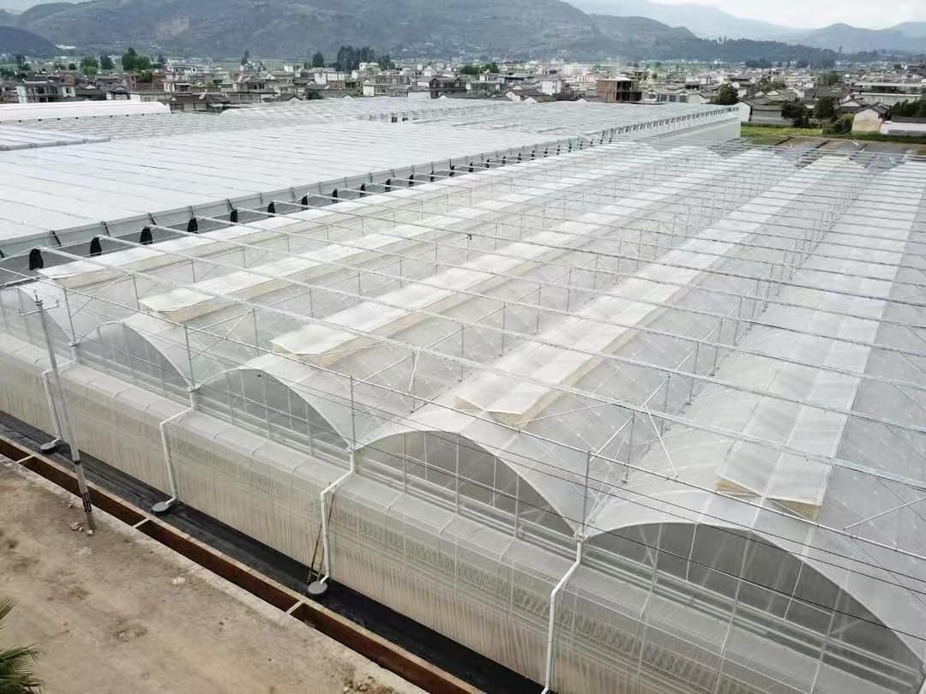
Greenhouse covering materials are a critical component of greenhouse climate management. Beyond their structural role, plastic films directly influence light transmission, light diffusion, heat retention, condensation behavior, and ultimately crop productivity.
At Orgil Profiline Greenhouses Int, greenhouse covering materials are selected as part of the overall greenhouse engineering strategy. Film type is matched to local climate conditions, crop requirements, solar radiation levels, and the ventilation, shading, and cooling systems used in the greenhouse.
Proper film selection contributes significantly to plant health, climate stability, and long-term greenhouse efficiency.
Clear / Bright Films
Clear greenhouse films are designed to maximize direct light transmission. They allow a high percentage of solar radiation to reach the crop and are particularly useful in regions or seasons with limited natural light.
Advantages:
- Very high light transmission
- Suitable for crops requiring maximum radiation
- Beneficial in low-light environments
Considerations:
- Strong direct radiation may create hot zones and shadow zones
- Less uniform light distribution inside dense canopies
- Higher heat load in hot climates
For this reason, clear films in warm regions are often combined with shading systems, ventilation, and cooling technologies.
Diffused (Milky) Films
Diffused films scatter incoming sunlight throughout the greenhouse rather than allowing only direct penetration. This creates a more uniform light environment and improves light penetration into the plant canopy.
Advantages:
- Improved light distribution
- Better canopy penetration
- Reduced shadow zones
- Improved crop uniformity and fruit quality
In many commercial greenhouse crops — particularly tall vine crops such as tomatoes and cucumbers — diffused films are often preferred because they promote more uniform plant development and stable crop performance.
Thermal Films
Thermal films are designed to reduce heat loss during nighttime by limiting the escape of infrared radiation from the greenhouse.
Advantages:
- Improved heat retention
- Reduced heating energy consumption
- Greater climate stability between day and night
Thermal films are particularly valuable in colder regions or during transitional seasons where maintaining nighttime temperatures is important for crop performance. In warm climates, however, thermal properties must be carefully balanced with effective ventilation and cooling capacity.
Combined Multilayer Films
Modern greenhouse coverings often combine several properties within multilayer film systems, including:
- Diffused light transmission
- Thermal insulation
- Anti-drip condensation control
- UV stabilization for longer film life
These advanced materials allow greenhouse designers to optimize both light management and climate stability simultaneously.
Chemical Resistance of Greenhouse Films
An important but often overlooked factor in greenhouse film selection is resistance to chemicals used inside the greenhouse environment. Commercial greenhouses may regularly use substances such as:
- Crop protection products
- Sulfur treatments
- Chlorine or disinfectants
- Acids for irrigation system cleaning
- Fertilizers and sanitation agents
Certain chemicals can degrade film additives, accelerating aging and reducing film performance. Potential consequences may include:
- Reduced transparency
- Loss of anti-drip properties
- Reduced UV stability
- Shorter film lifespan
For this reason, Orgil Profiline Greenhouses Int evaluates greenhouse films not only by thickness and diffusion characteristics, but also by their compatibility with crop protection programs and greenhouse maintenance practices.
Matching Film to Climate and Crop
Greenhouse film selection must always be part of the overall climate strategy of the greenhouse. Examples include:
- Hot, high-radiation climates: Diffused films combined with shading and strong ventilation often provide the best results.
- Regions with cold nights: Thermal films improve energy efficiency and temperature stability.
- Dense crop canopies: Diffused light improves canopy penetration and crop uniformity.
Integration with Climate Systems
Greenhouse films work together with other climate management systems such as:
- Roof and side ventilation
- Climate screens
- Shading systems
- Cooling technologies
- Irrigation and fertigation systems
When covering materials are properly integrated with these systems, significant improvements can be achieved in climate stability, light uniformity, condensation control, energy efficiency, and crop productivity.
Professional Conclusion
Greenhouse covering material is one of the most influential elements affecting greenhouse climate and crop performance. The correct film can improve light penetration, stabilize temperature, reduce condensation, enhance crop uniformity, and support higher yields. Conversely, an unsuitable film may increase heat stress, reduce crop consistency, and shorten covering lifespan.