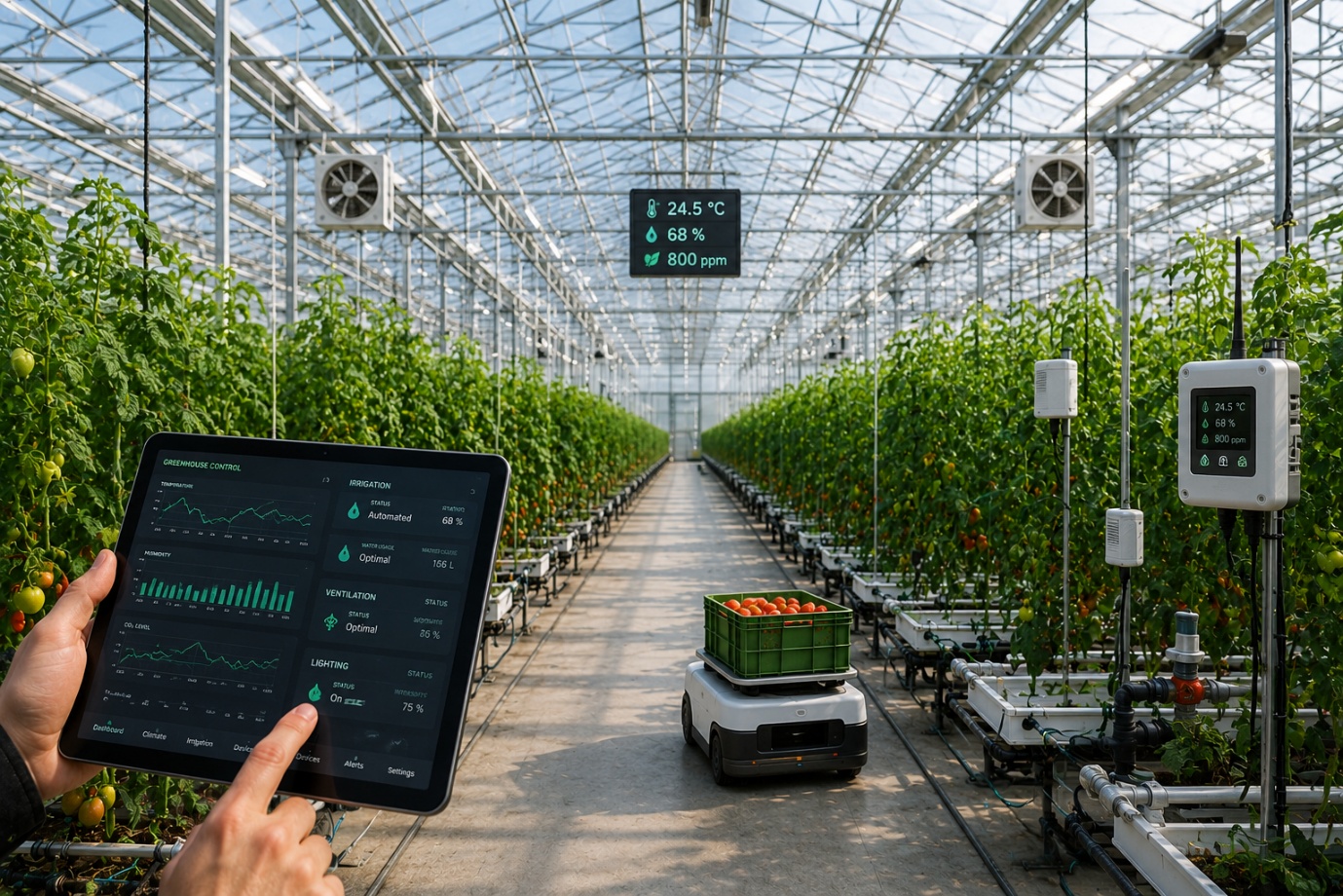
Successful greenhouse production depends on maintaining a stable microclimate throughout the crop cycle. Temperature, humidity, airflow, and radiation levels directly influence plant development — especially during flowering and fruit set, which ultimately determine final yield.
Modern greenhouse systems continuously regulate temperature, humidity, air movement, light levels, and sometimes CO₂ concentration. A central climate computer receives real-time data from sensors throughout the greenhouse and automatically adjusts ventilation, shading, cooling, fogging, and heating systems.
Orgil Profiline Greenhouses Int integrates these technologies into a coordinated climate strategy designed to maintain optimal growing conditions, support reliable fruit set, and maximize crop productivity.
Main Climate Control Systems
Natural Ventilation
Roof and side openings allow warm air to escape and fresh air to enter, providing efficient passive cooling.
Shading Systems
Shade screens reduce excessive solar radiation, protecting plants from heat stress while maintaining balanced light for photosynthesis.
Climate Screens
Internal screens improve energy efficiency by reducing heat loss at night and moderating solar radiation during the day.
Air Circulation Systems
Circulation fans maintain uniform air movement, preventing heat accumulation and reducing humidity-related disease risks.
Heating Systems
Hot water or forced air heating stabilizes temperatures during cold nights and critical crop stages such as flowering.
Fogging Systems
Fine mist systems increase humidity and provide gentle evaporative cooling, particularly useful in dry climates.
Pad & Fan Evaporative Cooling
Air is drawn through wet cooling pads, reducing incoming air temperature before entering the greenhouse — an effective solution for hot and dry climates.
Proper climate system design begins with analyzing the local climate, crop requirements, greenhouse structure, and economic considerations.