Modern agriculture is undergoing a fundamental transformation, with greenhouse cultivation becoming a key platform for creating stable, precise, and sustainable production systems. Beyond increasing yields, one of the most significant advantages of greenhouse production lies in the ability to manage crop protection in a highly controlled and efficient manner.
Structural Integrity — The First Line of Defense
A critical component in reducing pest pressure is the effective sealing of the greenhouse structure, combined with proper maintenance, without compromising optimal ventilation. The use of insect-proof screens, controlled openings, and regular structural upkeep significantly reduces pest entry while maintaining ideal growing conditions.
In advanced systems, this approach can lead to a 50%–80% reduction in pest penetration compared to open-field cultivation.
Biological Control and Smart Monitoring
Alongside physical protection, greenhouse systems increasingly rely on biological control strategies, including the use of natural enemies of pests, combined with monitoring systems such as sticky traps and pheromone traps. This integrated approach enables:
- Early detection of pest populations
- Targeted interventions instead of broad chemical applications
- Further reduction in chemical usage
In many cases, this results in a 60%–90% reduction in the use of chemical pesticides over the course of a growing cycle.
AI-Driven Climate Management
Environmental conditions play a central role in the development of foliar diseases and fungal pathogens. High humidity combined with specific temperature ranges creates optimal conditions for disease outbreaks.
Orgil's greenhouse systems integrate AI-driven climate control, which:
- Continuously monitors environmental conditions
- Identifies real-time risk scenarios for disease development
- Automatically adjusts ventilation, heating, cooling, and humidity levels
In addition, controlled day–night humidity dynamics help disrupt pathogen life cycles. This proactive approach can reduce the incidence of foliar diseases and fungal outbreaks by approximately 30%–50%, and in some cases eliminate the need for chemical treatments altogether.
When Spraying Is Required — Maximum Precision, Minimal Input
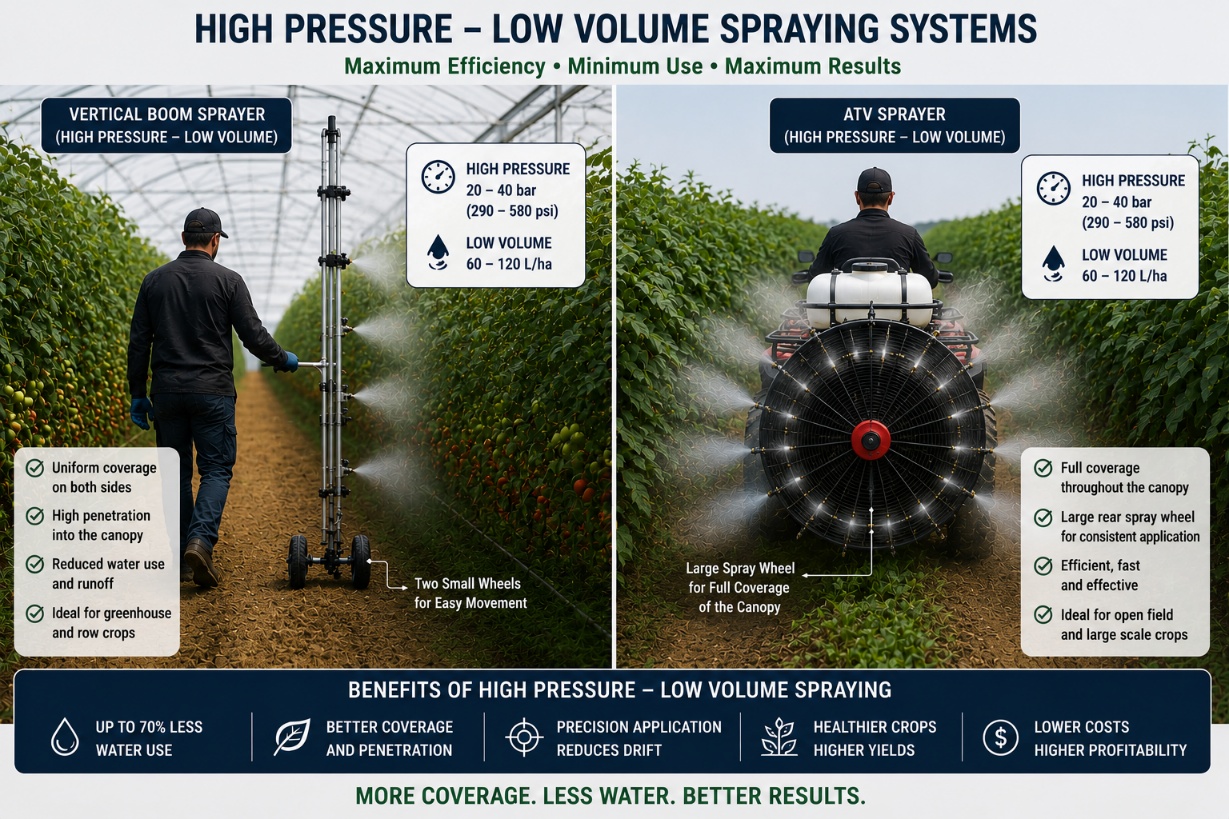
Even in advanced systems, spraying is sometimes necessary. In these cases, Orgil applies low-volume (LV), high-pressure spraying technology, combined with controlled air movement within the greenhouse.
This system produces micronized droplets, forming a uniform spray cloud that surrounds the plant, ensuring:
- Deep penetration into all parts of the plant
- Effective coverage of inner and lower canopy areas
- Full spray envelope around the crop
Proven Results:
- 30%–60% reduction in active ingredient usage
- 40%–70% reduction in water consumption
- 20%–40% reduction in spraying frequency
- 25%–50% reduction in labor time
- 20%–35% reduction in overall operational costs
In large-scale operations, Orgil also integrates advanced mechanized solutions, such as dedicated mini-tractors, enabling rapid, uniform, and precise application — particularly critical given the limited spraying windows in greenhouse environments.
Conclusion — A Multi-Layered Protection Strategy
Orgil's approach to crop protection is based on a fully integrated, multi-layered system:
- Physical protection — optimized greenhouse sealing
- Biological control — natural enemies and smart monitoring
- AI-driven climate management — preventing disease conditions
- Precision spraying — applied only when necessary, with maximum efficiency
This integrated strategy delivers significant reduction in chemical inputs, improved plant health and yield quality, lower operational costs, and reduced environmental impact.